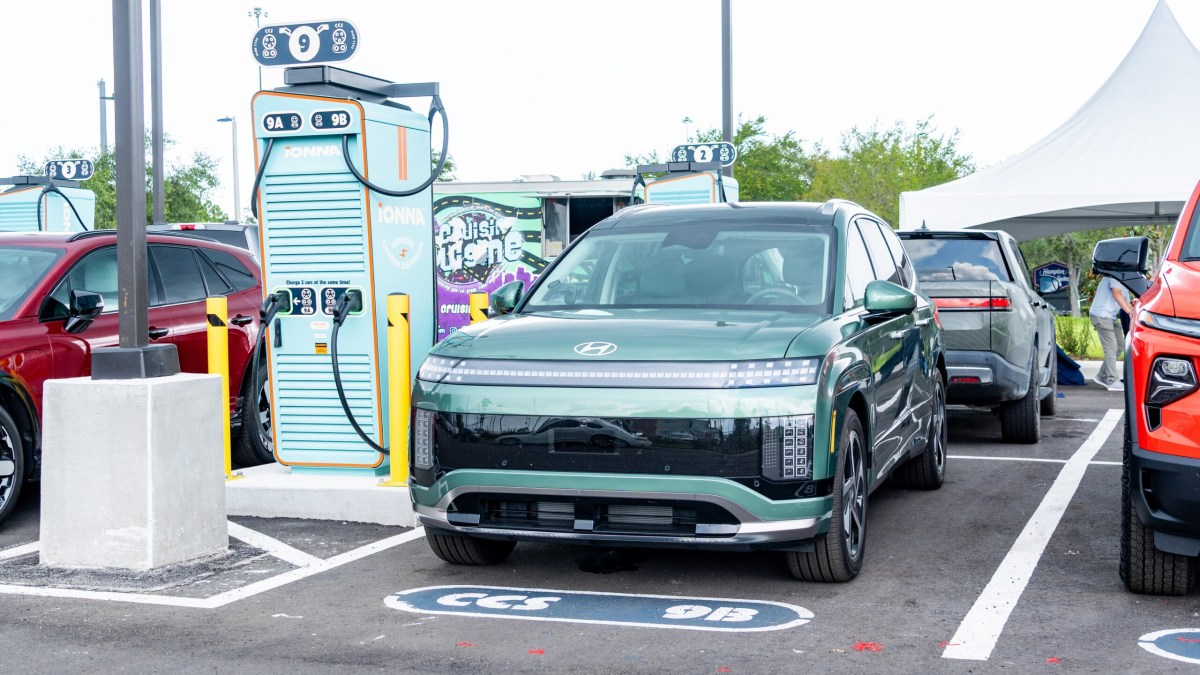
All the messaging about fast charging speed is focused on the wrong thing. EV drivers should be able to do the vast majority of their charging at home or at their destination. The messaging should be about getting chargers in more homes, apartment complexes and workplaces. Speed doesn’t matter as much if you’re going to be parked for half the day or overnight. That’s something that gas simply can’t do.
Fast charging stations should only be necessary for road trips, where you should be taking a break every so often anyways.
The fact that so many people don’t think about this or are unaware shows how well the propaganda worked.
Here is a car that is by far the easiest car you’ll ever own, the power to run it is the cheapest you’ll ever see, and 99% of your trips will be within one charge/tank meaning you’ll never need to worry about range ever - but the propaganda convinced them all that that’s a deal breaker.
As an EV owner the road trips we take are the vast minority of driving anymore. When we do there are options.
- plan out your route and stops. Requires maybe 15 minutes of planning before your trip. You pick a place with food nearby, get out for 30 minutes, stretch, eat your meal, and you are good until the next meal.
- if you are one of the 80% of households with 2 cars, take the other car for that roadtrip.
- get a rental car for your trip. (Remembering that a couple hundred for a rental car is vastly cheaper than paying for gas for 10+ years)
A year later, we still haven’t even gotten a 240V fast charger at home. Still just pluggin’ in to the old wall with a regular old cord. We still manage to get all the charging we need done during the cheap-metered hours, too.
I laugh when I think back to buying the EV. I was so panicked about getting fast charger as soon as possible. I thought the wall plug would get us through the weekend while we tried to find an available electrician, but then we’d get desperate. It just never happened.
I can vouch for this 100%. Have had an electric vehicle for 6 months now.
The vast majority of my charging has been done at home on 120v. Granted, my wife and I both work from home most of the week and have short commutes. Our grocery store has free 240v charging so I top up while I shop.
We took one long trip in those 6 months and rented cars for the drive to/from and used public transit while we were there.
I used a fast charger for the first time this weekend to drop off a kid at the grandparents a couple hours away on Friday and then picked them up in Sunday. Didn’t have enough time between trips for the trickle charge to leave me in a comfortable range. 20 minute fast charge did the job for about $15.
After 100k miles in an EV, road trips add about 20 minutes for every every 3 hours of driving. That’s all. It’s basically a trivial difference which gets statistically lost in the noise of traffic variability. If this causes an issue, it’s a lack of prior planning.
Yep, though that depends on destination in some regions. When my partner and I planned our trip to their parents’ place, what’s normally a 9 hour drive turned into a 13 hour one because we ended up having to charge up to 100% from 5% for one of the intervals due to lack of CCS stations, which was nearly a 60-70 minute charge each way.
That may have changed in the intervening year, and I’d love to have that drive only extended ~1hr instead because we can do ~15% -> 80% charging intervals instead.
I fully agree with you, but you should check out the rest off this thread. I have someone who literally said:
I’m not willing to compromise on my road trip plans.
I’m unwilling to plan out two 20 minute stops in my day long road trip that happens maybe once or twice a year in order to have the lowest maintenance lowest fuel cost vehicle I have ever owned. Not to mention the other two options if you seriously cannot do it. People are so carbrained/gas brained I just can’t even. I will never go back to owning an ICE vehicle, literally why would you?
Requires maybe 15 minutes of planning before your trip. You pick a place with food nearby, get out for 30 minutes, stretch, eat your meal, and you are good until the next meal.
It assumes when you want to eat coincides with when you need to charge. It assumes there’s something you want to eat within walking distance of the charging station. Also assumes you eat as often as you charge. I almost never find any of those to be true.
okay so a few times a year your meal isn’t exactly when you want to eat. or you can’t eat exactly what you want to eat.
i’ll take that over having to go to a gas station weekly to fill up and pay $50 for the privilege.
Good thing I wrote up two other options if it doesn’t work for you. It works perfectly fine on our car trips.
And what will happen to all those gas stations when we are at 90% EVs adoption, as is the goal? Where will you find a gas car to rent? How many gas stations will be left? EVs still need to be much faster at charging if we are going for high adoption
Is your argument both in the same breath that EVs will catch on too quick that all gas stations will disappear in a matter of days and also that EV adoption will not catch on quick enough because charging is too slow?
I want EVs, but they’re simply not good enough yet. They need to be much better before they can reach 90% adoption
EVs are perfectly fine, even with current charging speeds. the problem is not fast charging but AC charging coverage. everyone should be able to charge their cars at home or work.
The thing with charging times is mostly anxiety based on fear of the unknown rather than anything tangible
simply not good enough yet
This thread is full of people telling you the opposite. I own an EV and am telling you it’s the best car I’ve ever had and will never go back. If you don’t believe they’re good enough then you need to analyze why you believe that, because it’s simply not true. If you want to ask me questions about what they are actually like, feel free, but I won’t sit here and help you “feel” better about them when all the facts show that they’re great vehicles to own.
the vast majority of their charging at home or at their destination.
Absolutely true, which is also why I found it extremely annoying when reviewers began claiming that range wasn’t as important as fast charging speeds in daily use. Luckily most have stopped that shit, probably realizing there’s a reason most people want good range, and this is one of them. Also charging at home/destination cost way less than using a fast charger, and it’s better for battery life too.
Yeah EVs seem almost non-viable if you live in an apartment complex right now, which is a shame. At least where I am
I live in an apartment and can neither charge at home nor at work. I just charge when I go grocery shopping. It’s absolutely viable.
When we made laws for handicap parking, there was handicap parking everywhere, overnight.
You can literally have just a simple wall plug and charge a car. It doesn’t need to be a fitted wall-mounted charging box. Yes, it is much slower and takes 24+ hours to charge the car completely but most people don’t actually use much of their battery per day anyway so if you plug in every night when you get home, you’re not going to have a problem for the majority of the time. And those are a very cheap socket run that an apartment’s body corporate could/should install.
Not OP, but nearly every apartment complex I’ve ever been to has absolutely 0 electricity to a surface lot, and very limited/restricted access in a garage. And no apartment managers are going to change that unless there’s money to be made from it.
Fortunately, newer buildings are now including some public charging stations, presumably getting a portion of the sales.
Theres no external outlets just out in the parking lot in my complex. You’d have to run an extension cord out a door or window all the time, which would leave them cracked, and I live on the third floor
More progress really needs to be made on infrastructure for a lot, probably the majority of apartment complex dwellers
All doable… we can route power easily enough to about any place on this planet
I agree :) all fixable problems, just things that will take time and will progress naturally as electric cars become more and more commonplace
Especially once EVs start to become like a relevant part of the used market, since I think that makes up the bulk of cars at a lot of complexes. Most of the cars parked out by mine aren’t new
I have been an EV owner since 2018 and I have never had a “level 2” charger installed. I’ve been fine with just plugging into the wall. Now, granted, my cars have been 80-125 mile range vehicles. But it’s been fine.
Which part of “apartment complex” did you misunderstand
Most EVs charge at home doesn’t mean it’s not cheaper than fossil fuel even using the charger down the road. As for convenience, using a public charger is like pouring fuel in at the petrol station.
Even disregarding the fact that reliable electric cars are much more expensive secondhand than comparable ICE cars, there’s still a significant economic barrier to owning one. It’s significantly more difficult to effectively own an electric car if you have an apartment, or live in a house that only has street side parking, or live in a house that has a landlord that’s not willing to install an expensive electric car charger, which covers the vast majority of lower income housing.
Amen. The building I work at, where there’s roughly about 100 people each day, including police department and local part of ministry’s office has exactly ONE charging point built last year. One.
My EV’s getting older now, but it’ll still do 400+km if I charge it fully overnight. If we’re doing a road trip it’s time for a burger and to stretch ones legs when it’s getting low anyways. Eat my food, get some rest and 20-30 minutes later I’m ready to go again.
I was sceptical before buying it, but I will never buy a gas car again. And I work in oil and gas
One doesn’t have anything to do with the other. Fast chargers ARE for road trips. And we can improve them irrespective of L2 chargers. Where are you seeing “messaging” that suggests otherwise?
It’s for all the people that wont accept that must be able to charge to full at any moment regardless that they usually wont have to because its already full from being charged at home/work etc
deleted by creator
that’s not always true, its free at my workplace I just need to unplug every two hours. They do that so people don’t sit on the chargers all day. I know people without home charging, for them its 6kw charging at work, public parking and a visit to a fast charger when needed. They say its still cheaper than gas.
That’s basically me.
No home charger because no off street parking and fuck NJ.
Ignoring the better driving comfort of an ev, which is valuable on its own, it’s still much cheaper to charge on the go, than buying gas.
deleted by creator
- Depends on your utility plan and if it’s time based or not. The chargers at work are the same price from 7:00 to 22:00.
- Yes
- Depends on the office. Plenty of office parks don’t require you to move.
- I’ve avoided (as best I can) the “energy providers” that charge and extra fee just to charge. Obligatory fuck ChargePoint.
I can’t charge at home (fuck you NJ) but still have two EVs that I take to the single public charger (limited to 2 hours) nearby because fuck gas powered cars.
Maybe next time don’t make sweeping generalizations about things you personally haven’t experienced.
Industrial electricity prices are a lot more complicated than residential. You basically get the price set by your highest demand/lowest supply. Meaning you charging your car could hike their rates.
deleted by creator
Answers “possibly” or just straight up “yes” to literally every point, and then criticizes them for generalizing.
While EVs are 100% the way to go, acting as though the very real problems and drawbacks faced by real people don’t exist is disingenuous and just gives anti-EV people more ammo.
Problems exist, sure. But not those.
Then why were your answers “Possibly, Yes, Possibly, Yes”?
The problems being fixable by legislation a) doesn’t make them not problems and b) doesn’t mean they’ll actually be fixed by legislation.
Those were my answers because those were my answers.
Gasoline cars need to accept grass if they are ever to be a viable replacement for a horse. Like, what if you’re far from a gas station but there’s a meadow right there?
Only fringe enthusiasts can own a gasoline car that doesn’t have a biofuel fermenter attached.

Ah yes I forgot that fusion energy has been a few years away for decades now.
I bet that’s what Iran was working on before the freedom fighters of Israel and USA blew up that elementary school.
The reality: “Nobody stops to fuel their vehicle taking gasoline, gets out, rushes as fast as possible, puts as much fuel in the car as possible, and gets back in the car and drives away,” Cutler said.
I, in fact, do exactly that. I pull up in front of the pump, get out, stick my card in, fill up, and leave. It’s been over ten years since I went inside the store at a gas station, there’s nothing in there I want to buy.
However, needing to spend half an hour recharging if I were on a road trip would be fine, because on a road trip I would stop for a break from driving in any case. But, I almost never go on road trips, and 99.9% of my trips around town would be well within one charge, which I could do at home.
So, while I agree that charging doesn’t need to be as fast as gas, it’s not because of his stated reason.
Yeah that’s a crazy out of touch thing to say. That is exactly what every person does at every gas station.
Definitely.
Its ignoring that people’s use of their personal vehicle is actually for work purposes, commuting; and guess what? People don’t like to commute and try to get it down as quickly as possible.
His situation does work for people on road trips, but ignores the daily lives and routine of everybody that works for money.
Another instance of CEOs having immense privilege and literally cannot fathom or understand how normal people operate. I mean, just go stand outside a 7/11 for 30 minutes and start counting how many people go inside vs getting their gas and go.
It’s been over ten years since I went inside the store at a gas station, there’s nothing in there I want to buy
Wait… you dont want a tiny chocolate bar for 7 dollars?
Excuse me, it’s a medium size chocolate bar for 6.59 if I got >10 gallons and a soda+hotdog, with membership.
I have a cheap Mazda 6e with the small battery. It has on a bad day 390 km range if I run heater, in sport. For daily use I can hold over a week with that. But I have a home charger so battery is always full each morning. I only ever need to charge in a station on road trips. At least in Norway which is a mature EV market most have home charger. Only those with street parking (not that common in Norway outside perhaps three large cities) don’t have home chargers.
Agree that people want to fuel fast tho’
I could stretch my legs for a few min, but that’s only on long trips.
Also ignores the main issue, what happens when there’s many cars and not enough chargers? It’s not inconclusive to wait for one or two people behind you for gas, that can mean 90 min total stop for EV. Ignoring that the line will be longer if more people need to charge and range is lower.
I want an ev for my next car, but I’m scared of that
I have had a EV for 6 years and and just switched fulle to electric.
Not once in that time I had to wait for a charger but multiple times I had to wait for a pump.
Plus…you know beforehand if a charger is busy so you wont go to a busy charger anyways
How do you know if the charger will be busy?
They are online and share their status with Google maps or the navigation software from your car.
If these damn things are always-connected, always-sharing your location with manufacturer and their 1793 partners, they are able to have the vehicle direct you to an open charger.
Depends…lots of places do not have card readers on the outside to promote shop sales.
So… often you definitely will have to go inside and…wait.
I’ve never encountered such a gas station. I’d probably be completely confused and just leave.
Maybe I’m privileged for thinking it’s common knowledge that gas stations basically make no money from selling gas. I don’t want to provide income to that industry - so I never go inside. Like the other poster I would just drive 1 minute to the next station and never return to one that demanded going inside the markup store…
ITT: Lots of people dont realize how infrequently you actually stop at a charger if you have charging at home or work.
Since they installed chargers at my workplace roughly one year ago, I have stopped exactly 3 times to charge in a public charger:
First was when we had an issue with chargers the day before I was going on a 2 weeks holiday out of town.
Second was when I arrived to my holiday destination.
Third was the day we were going back home from the holiday destination after two weeks.
That’s about it in a whole year.
Okay, now what about the people who don’t live in SFHs? I could charge at home most nights if I had an EV, but a lot of people literally can’t install chargers.
It’s so easy to install communal chargers, that no house has an excuse to not do it. It just needs to be normalised.
Here where I live, I don’t think there is a house with no ev charger at a parking space.Of course your daily mileage comes into play… but
You don’t have to install a charger, if you can charge your laptop/phone at home you can charge your car at home.
It’s just an extension cord.
Of course this requires you to run the cord outside if you don’t have a garage but it’s not like you have to bury it or anything. Because again it’s just an extension cord.
And even if you want “fast” charging at home you aren’t really “installing” a charger you are just getting a 220v outlet installed in the US. If you have a central A/C unit or electric dryer as an example you already have this installed in your house you are just adding an additional outlet for ease of access.
The “real” fast chargers that are installed for public use are not being installed in your home because those are 480v or even 800v. Which is considered industrial use, as far as I am aware you can’t get that power connection in your garage because the infrastructure isn’t there.
So like, out my door and into the parking lot?
I’m very pro ev, but getting apartments to have charging stations is a big step forward we need to take to encourage adoption
I’ll let my friends living in apartments know they can run an extension cord from the 5th floor then lol, I’m sure there’s nothing unsafe about that.
Daily mileage isn’t the only factor either. I’m not sure why I would pay 30k for a used EV if it costs almost the same to charge per 100km as a diesel car worth under 2k takes to refuel per 100 km but takes much more time to do so. EVs start making more sense for people in apartments when public fast charging is nearly free, like charging at home is.
Hey everyone with an electric car did you know you are wrong because if i follow this correctly.
1 .You can buy a 20 year old car for $2000. 2. This person knows someone who lives on the 5th floor.
Yeah it’s called individual choice. It’s not for everyone in every situation. Just like diesel versus gasoline or natural gas or walking or riding a bike or taking a bus.
But the point I made still stands you don’t “have” to install anything.
And yes I have seen people running cords out of windows from apartments. Is it the best option. No. Would I do it also no.
But there are options available.
Make the choice that works best for your situation.
If we’re going to ban fossil fuels 100%, we need EVs to work for everyone. If we don’t ban fossil fuels altogether, people can continue driving old cars which is bad. I know I will.
If we’re going to ban fossil fuels 100%, we need EVs to work for everyone.
Why? We’ve made THOUSANDS of changes to society over the last century that did not work for everyone, but where a lot of them benefitted the (vast) majority. We should continue having that as the aim. The idea that a solution (for ANY problem) exists that works for literally 100% of the population is silly.
It doesn’t have to be a binary choice. We could have regulations that require EV charging stations on new construction, from street lamp poles, etc, and still let people fill up their gas car.
The government should probably do something to combat the proliferation of huge pickup trucks, but idk what that would look like.
If we are going to ban fossil fuels 100% (we aren’t) but if were going to, personal vehicles would be banned for being grossly inefficient uses of space and resources to build.
You live somewhere that allows randoms to lay trip hazards across the pavement?
Allowed? No. Do people do things that they aren’t allowed to do even when they aren’t the best option. Yes all the time.
I would be willing to bet wherever you live there are things that aren’t allowed happening all the time. In fact you, just like everyone else probably participate in some of those activities regularly.
For example, since this conversation is about cars. You have never once driven over the speed limit (depending on where you are under the speed limit) or drove somewhere without a seat belt or used your cell phone with your hands while driving. How about using your turn signal to change lanes 100% of the time.
The world is full of rules not being followed.
Anyone doing those things should have their car crushed.
Turning walkways into a hazard course is not an acceptable approach.
Yup. I’ve had an EV for 6 years (in Texas of all places) and have only used a public charger a handful of times, and mostly because of the novelty to see what DC charging is like. I’ve only needed it one time on a long distance trip. So 6 years, 1 DC fast charge.
Most EV owners do not realize that most car drivers live in apartment buildings and have no chance to charge their car at home.
I live in a building that was built in 2023 and has no underground charging stations. In fact no stations around the building either. In Germany. Berlin. Yep
Most people in western countries (Europe+US) live in houses.
I suspect, without digging up evidence, that people living in houses are more likely to be car drivers than people living in apartments (who are more likely to have access to mass transit), so the data skews even further towards houses.
Also, without digging up more numbers, I suspect many of the apartment-bound-car-drivers have consistent workplace parking that could be (but likely isn’t yet) converted to support workplace charging.
I recognize that information doesn’t help your current situation at all, but it is not in fact the majority experience.
deleted by creator
Most trips don’t eat 100%, if your commute eats 10-40% of your battery 5% an hour on 110v at home is just fine.
Probably a lot better for the batteries too.
deleted by creator
I do 120v / 12A charging at home and an overnight charge exceeds my daily commute. But, yes, a 240v / 25A charger is much faster and an overnight charge in them can cover a daily commute I would find punishingly long.
Why do you think these screenshots add anything of value to this discussion?
Ha you’re right!
The few times I’ve charged an electric rental car, I had to go pee and buy snacks or go for lunch anyway… in my opinion a longer break of a few minutes from driving is healthy and safer anyway.
Right, the more you plan ahead, the more efficient you become. First, I look at where chargers are located, then I choose restaurants, grocery stores, shopping malls, hotels, based on those locations. Even sports complexes and community centres. But if you charge at home daily and stay in the same city, you don’t even need public charging at all. Highway level 3 stations are those that really matter.
Of course. I only needed them for larger trips so I had to plan. Charging at home for everyday use is of course superior in many ways.
We only have to plan once for each trip so once that is done, most of our frequent trips are planned ahead.
For major highway corridors, we need to have chargers that are less than a 5 minute detour from the highway, at least one every 50 miles.
Otherwise someone with 250 miles of range, who prefers 50 miles of buffer (in case a charger has a long line or is broken) might need to stop every 150 miles. That’s a break a little bit too frequently.
Nobody stops to fuel their vehicle taking gasoline, gets out, rushes as fast as possible, puts as much fuel in the car as possible, and gets back in the car and drives away
This almost reads as satire. Like this has to be a joke, right? No way this guy can really be this stupid (or out of touch), right?
I’ve done a few cross country moves where I would only try to time out a stop for all three reasons at a time: restroom, refuel, meal. I was doing pretty great with only one stop every 4-5 hours or so, 14 hours of driving per day.
As an EV owner (and a parent who now usually has kids in the car), I go at a much more leisurely pace and don’t need to do that kind of road trip anymore. But I totally get why it’s the default for a lot of people trying to get from one place to another
It’s a banana, Michael. How much could it cost?
This is what happens when CEOs or any of these idiots are detached from reality for too long. Who is hanging out at the gas station? At most you go in to grab a pack of gum or cigarettes or something. I honestly feel like the only job of CEOs these days is to gaslight the public and convince them that the things they say are true, when every normal person clearly knows its false.
From ‘everyone loves to chill at the gas station’ to ‘people should love data centers in their yard because it brings jobs’.
Look I know the ‘elites’ think normies are idiots, and there are plenty… but its really getting old now
He’s saying most folks take something like 10 minutes taking their leasurely time. So that is the goal for ev charging
I mean, he’d still be wrong in my experience, but aiming for 10-15 min EV charging sounds fine. Would being as fast as gas be preferred? OF COURSE. I don’t want to spend a moment at a gas station that I don’t need to. Hell, I’ll leave if the pump is too slow and get gas sooner at a better place.
Obviously they are not a fan of motorsport.
I certainly don’t rush it, tho. It’s full when it’s full, and then i wobble to the checkout.
He is a shareholder in Buc-ee’s and sheetz and whatever large gas station chain. He wants you to spend 1-2 hours there increasing their sales.
deleted by creator
deleted by creator
The great majority of my gas stops are stop, fill up, leave. I expect those would be eliminated by having a EV I just charged at home though.
Yes… I see a DC charger maybe 2 or 3 times a year.
For the cost of running a washing machine.
Hmm. There’s many ways that could be a lie. Could I get a source?
A source that a car and a washing machine both use 240V? Sure you could.
Voltage != power draw
Pretty sure that beats the $40 to fill my tank by quite a lot.
I’ve got a Rav4. Costs about $40 to fill up. Just got a Subaru Solterra (same vehicle as the Toyota bz4x). Costs about $7 to charge, given my electric rates. Similar range (Solterra is a bit shorter). And that’s neglecting my solar.
The calculation is too difficult?
I don’t know how much it actually costs to run my washing machine so I cannot make a definitive statement.
Like EV charging, washers and dryers run on 240V. My approximate energy use for a laundry load (washing + drying): 3 kWh. My own EV driving uses about 5 kWh per day. That’s how I got the number. Same order of magnitude is my point. At least in my case. Changing the laundry size and frequency, and driving habits, could actually make those numbers (3 and 5 kWh) close to equal.
I wasn’t trying to argue with you.
Me neither, just explaining what I said for everyone to understand, hoping it helps someone.
“And while China’s getting there, an executive in the U.S. aren’t so convinced that’s true.”
Why does this sentence bother me so much?
Like an executive will be driving himself anywhere.
Yes. Because with an EV you live at the gas station.
People need to stop thinking about EVs like cars that need to be fueled. They’re more like phones that need to be charged.
And you know what they keep trying to do with phone batteries? Speed up charging time. They keep trying to find new novel ways of making a charger charge a phone from 0 to 100 in less than 5 mins.
You think they aren’t doing the same for EV’s?
I’m not saying they couldn’t be better. I’m saying that most range anxiety comes from people thinking of EVs like tanks that need to be filled from a special place, when they can actually be charged basically anywhere.
Range Anxiety comes from living on the east coast and wide availability is not a thing, unless it’s a gas station. I mean some places are starting to roll out some more accessibility towards them but seeing a charger at Mc.Donalds, isn’t a thing as much as it is on the west cost. I’m guessing on the west coast you’ll see them in hospital garages, strip mall parking lots, fast food parking lots and of course gas stations. EV’s have always been more a west coast choice.
“Anywhere,” is broad af and isn’t true. Any home, yes. Anywhere is dependent on if a charger is available. I mean yeah, you could have a secondary charger that you have with you like a spare gas container/jerry can in your vehicle and find a spot where you can charge it but at that point you may as well go to a station. Also, if no one really uses their full tank and if 20% is the point where you’re more likely to charge it before the actual anxiety kicks in, you’re gonna want to calculate the amount of time it takes on an average speed for it to run out which makes it so that you’re pretty much screwed if you’re not near a charger, nmw.
Like someone using gas, you could be running on fumes and get to a station, when that ev battery is done, it’s done. I’m pretty sure a lot of us have been in a car and someone’s driving and saying lets see how far we can drive on empty before it runs out completely. It takes so long in a gas car that it’s miraculous and like a joke and a game at certain point; hell! There was a Seinfeld bit on that too with Kramer and test driving a car and it going empty and him and the car lot dude were seeing how far they could get on empty. I know it’s bad for the environment and stupid expensive but the seconds it takes to fill a gas tank is far more worth it to the average individual but that’s my opinion.
The one thing I can say about gas, is a gas tank takes seconds to fill via gas container/jerry can of gas and get you to a station. If you have no electrical source for the charger you brought, how are you gonna charge it just enough to get you to a station to fill it?
Range Anxiety comes from living on the east coast and wide availability is not a thing, unless it’s a gas station.
Before I moved around the world, I lived in Indianapolis. The EV situation there wasn’t fantastic, but it was good enough. Grocery stores, hotels, parking garages, apartments, Costco, even some public parks had charging stations in front of them, not to mention a lot of people’s workplaces. I’m sure that New York, Boston, Atlanta etc. are all better than Indy was, and as EV adoption increases, having chargers in your parking lot will become more and more of a perk.
“Anywhere,” is broad af and isn’t true.
An order of magnitude more places than you can find gas outside a gas station.
you’re gonna want to calculate the amount of time it takes on an average speed for it to run out which makes it so that you’re pretty much screwed if you’re not near a charger, nmw.
Every EV instrument panel I’ve ever seen includes a “range remaining,” same as modern gas cars.
Like someone using gas, you could be running on fumes and get to a station, when that ev battery is done, it’s done.
This seems like a really weird objection. When you’re out of gas in an ICV, you’re done; when you’re out of electricity in an EV, you’re done. There’s no such thing as “running on fumes,” actually; engines need liquid gasoline to inject into the cylinders. When the gas gauge hits empty but the car is still running, that’s just because the sensor that reports gas capacity isn’t sensitive enough to detect the last remaining puddle of gas in the tank. That problem is far less pronounced with battery capacity. So what you’re complaining about here is that the battery state-of-charge sensor is too precise.
I mean, that’s just strange.
The one thing I can say about gas, is a gas tank takes seconds to fill via gas container/jerry can of gas and get you to a station.
There are two scenarios for running out of gas in an ICV:
-
one, you run out right by the pump, or in stop-and-go traffic in town. Both an EV driver and an ICV driver in that situation would do the same thing: ask for help to push it to the pump. The EV driver has an advantage, though: they can push their car into anyone’s driveway and ask the owner if they can plug in for a few minutes.
-
two, you run out on the freeway, far from town. Again, both an EV driver and an ICV driver in that situation would call for help to get them to a station. The ICV driver would fill up a jerry can and take it back to the car. The EV driver would save a trip, because they’d just have a truck tow their car to a station where they could charge up. And actually, just like AAA has spare cans of fuel in their roadside assistance vehicles, some of them are starting to carry around a generator or mobile power bank to get cars that last few miles they need to get to a station.
But for all of this, remember: most of the times you’ve ever run out of gas, it’s not because you misjudged a distance. It’s usually because you didn’t realize how low the tank was when you left. With an EV, you don’t have to worry about that because your battery is full when you leave the house. That or you’re going on a road trip, for which you’ll need to plan anyway; might as well just plan charging stops. Most EVs have that part built into their infotainment systems.
Honestly, I don’t remember the last time I ran out of gas. Like, completely ran out. I know it’s happened to me, but it has been a very long time. Twenty years or more, maybe. I just don’t think it’s as big an issue for most people as they think it will be.
-
I mean, he’s kinda right. It just needs to charge you enough to get you where you plan to go and then you can plug in again and charge passively. Being able to have on-site charging basically anywhere the car can actually go makes it more convenient for everything except road trips, and since initial charging from low battery percentage is much more efficient, people just need to not feel the compulsive need to top off at 100%.
Most of the time, they don’t need to be anywhere near as fast as gas (most, maybe even nearly all, people have or can have a way to charge at home). But there’s lots of people that don’t do long stops on their trips and just want to stop, fuel up, and go. The EV can be a bit slower, but anything over about 15 min is going to be a showstopper for alot of people.
Many people don’t enjoy having to regularily go to the fuel station, but they have to. You do not necessarily have to do that with EVs. Habits form around necessities.
Oh, for sure. I haven’t needed to go to a public charger since I got my EV. And I don’t forsee making very many trips to one in the future. Home charging just changes so many things.
I mostly agree but part of me thinks you can get away with below 80% charges to save time rather than being hung up on the time to reach that 80-100%. (shifting one’s thinking like how EV roadtripping is currently about reaching the next charger rather than a 100% fill each stop)
I say that because some gas vehicles like the two-door Bronco just have relatively poor range (in the 200’s) due to smaller tanks and I’ve seen how long folks can wait in line for gas at Costco. (having also been in line)
Most of the DC fast charge specs are like 20-80% because that last 20% is usually much slower. Even with my home charging I don’t typically charge to 100% because it’s better for battery health not to. And yeah, alot of the planning apps don’t assume you’re going to be charging to 100% each time - they tell you what you need to charge to at each stop.
(most, maybe even nearly all, people have or can have a way to charge at home)
What? Most people where?
I live in a fairly rich European country, and EV chargers here practically don’t exist. Almost everyone lives in apartment buildings. If you’re lucky, yours will have 1 or 2 chargers in the underground parking lot or somewhere close by outside.
It’s even worse in Eastern and Southern Europe. Outside of North America, Europe, and China, EVs, as well as chargers for them, don’t exist at all.
Are those ‘most people’ you’re talking about actually just <5% of human population that happen to live in North America or Western Europe, and happen to be wealthy enough to afford that?
EV chargers need not be some special thing. Level 1 charging is more than sufficient for the vast majority of people. Can you find a regular outlet near where you park? Maybe with the help of an extension cord? Or maybe your complex could put outlets in.
Arguably, EVs work even better for places that don’t have infrastructure. Which is easier? Building a network of fuel stations (which need electricity) and keeping them supplied or putting in solar panels in people’s villages? I’d argue the second is generally easier now and is overall better for society - electricity comes with so many benefits beyond just being able to charge your car.
Then there’s upcoming EVs, like what Aptera is working on. Those will be able to add significant amounts of range each day using just the solar panels on the roof. Now you’ve got a car that needs no infrastructure at all (but can use it, if it exists).
I really don’t think charging EVs from regular outlets is at all realistic for the vast majority of people.
Unless you live on the ground floor, you’d have to drag a long ass cable through one of your windows. One of my neighbours actually does that, but just imagine everybody doing it. Not to mention the grid would most likely be unable to handle the load.
I’ve never seen public outlets, aside from USB ports in public transport, so I doubt it’s a thing.
Honestly sounds like a reasonable idea, and not just for EVs. The problem is that more and more countries are steadily moving away from public goods, so every building/complex would have to organize it individually.
Arguably, EVs work even better for places that don’t have infrastructure. Which is easier? Building a network of fuel stations (which need electricity) and keeping them supplied or putting in solar panels in people’s villages?
Absolutely, agreed. But keep in mind the fuel stations are already there, because most countries spent the last 150 years building them everywhere.
It’s an unfair comparison, of course, but it’s also impossible to make a fair one. As it stands, pretty much all developed and a lot of developing countries are already well connected when it comes to gas stations. It’s a lot cheaper and easier to keep them going, than it’d be to replace them all with EV equivalents.
Then there’s the question: does it really make sense to spend the next 50 years upgrading all that infrastructure? When, at least in Europe, public transport is already present everywhere and well developed?
Would it not be a whole lot easier and cheaper to just get rid of fuel stations, and keep expanding public transport, which emits dozens of times less CO2 per passenger than cars do?
Now, obviously, there are still uses for personal vehicles, even if public transport is great. It’s not a question which one to focus on exclusively, but which one to propritize.
Those will be able to add significant amounts of range each day using just the solar panels on the roof.
If this can be done well, then yeah, infrastructure problem kind of solved. Then you’d just need to wait for people to upgrade their existing cars, and afterwards all that gas infrastructure is basically redundant.
And that’s why battery swap stations should exist.
Give me an option to quick-swap modules ;-;
It sounds way too easy to do.Only issue I see: How to make all manufacturers agree on the battery form?
So many people will get gas then go in for snacks by the time you wait in line and get gas that’s 20 minutes alone.
That’s why I figure 15 min, give or take, is low enough for it to not matter for most people. It’s not alot more than what even a quick gas stop would be. And that’s not some unobtainable thing. Tesla superchargers can already do it. Some Chinese brands are already at 10 minutes and pushing for <5 minutes.
I was arguing with my mum and she said it can take twenty minutes to recharge the car. I said, after driving for five hours don’t you want to get out, stretch your legs and have a coffee? That’s half an hour easy.
there’s a supermarket by me that has EV chargers for free while you shop. absolutely genius
The reality: “Nobody stops to fuel their vehicle taking gasoline, gets out, rushes as fast as possible, puts as much fuel in the car as possible, and gets back in the car and drives away,” Cutler said.
Say what? Outside of a long road trip, that’s very much what I do every time. I haven’t been into the store at my gas station in years. I’m hardly alone, I see plenty of other people fill up and leave.
The “charging problem” is most completely addressed by doing less driving. Obviously.
In the context of EVs, your daily grind refueling is a scenario that doesn’t really exist - and shouldn’t exist. Your weekly trip to the gas station should be replaced almost entirely with AC charging, either at home or at work. DC fast charging should only be used when you are driving an extended amount in a single day. And if you’ve been driving 200 miles that day, you probably need some food and a restroom.
Coincidentally, it solves one of the biggest (and least explainable) gaps on fast charging. If you make your regular rest/food stops the same thing as your charging stops, then you’ll spend very little extra time charging on a road trip. It’s always been weird to me that fast chargers have traditionally been nowhere near amenities like food and restrooms.
We just came back from a trip. Started with below 50 percent, first stop was a nice caffee for a second breakfast. Within 20 minutes, charge went up to 80, giving uns around 400 km range. The car was full before we even finished.
The planing simply changed. Instead of rushing through a gas stop, we prefer a route with places for a nice break. Or, in a pinch, nearly every McDonald’s now has a row of quick chargers.
It is becoming a non-issue.
Went to Italy…wanted to grab an Espresso… the car was at 80 percent before I even manage to get the cup in last my hand…
Yeah, that statement makes little sense in context of ICE, but the point does kinda work for EV. Ideally, outside of road trips, you wouldn’t go to designated charging areas, but just charge where you’re going anyway. I usually charge at a supermarket
Yeah, same for me. But it is true that it doesn’t necessarily apply when charging at home, overnight.
Yeah that sentence was bonkers. Like that’s exactly what most people do haha
Obviously you made the mistake of not being born wealthy. If you had just been born wealthy, you would realize that driving long distance is something you very rarely do, or when you can’t find a trustworthy peasant to ship/drive your vehicle to/from your summer home.
Longer trips in EVs require one small reframing, at least when compared to how we used to do longer trips before.
In longer trips with an ICE, we would have a meal before the trip, then drive until the destination, and have a meal when arriving.
With an EV, you should plan to have a meal on the road, and charge while you eat.
I’ve had a few experiences with this recently on a 300k trip we do fairly regularly. We do it in an older EV with comparatively poor range, but still we get away with making one stop to eat and charge.
Annoyingly, I’ve found that charging during meals does not work either. Your options are either AC charges, which are not fast enough to fill the battery over the course of a meal. Or DC fast chargers that will charge in ~20 minutes, give you a 10 minute grace, then start charging you an idling fee.
i usually eat on the road anyway. with gas cars i’d go through a drive through after the gas station.
a 20 min EV charge is enough time to get food and eat on the road.
But you can move it when it finished, and then continue your meal, yeah?
Alternatively, take smaller stops more often. It’s so much better to stop every 100km for like 15 minutes to walk around, get a pee break, or whatever, than to endure 4 hours of sitting in one go.
A 15 minute break every 50 minutes would send travel time through the roof. I went on a trip last week, 900 miles and 12 hours each way. What you propose would mean going from 2-3 5 minute stops to 14 15 minute stops, and would increase the travel time from 12 hours to 15.5 hours.
12 hours of sitting with 3 5 minutes stops is unbelievably bad for you. 12 straight hours of driving is unbelievably bad for you. None of that should happen, ever. Even if it’s your job. It’s bad for so many reasons. If you frequently subject yourself to this, you actually need to be forced to take more longer breaks, your body and mind will say thank you for it. 12 to 15.5 is hardly through the roof, it’s what, 25% increase? It honestly should be more.
My i3 only has 200km on a good day. I truly don’t mind, even on the occasional long distance trip. I’ll drive slower (110 vs 120kph is almost negligible), take a break every 1 to 1.5 hours and just generally drive more aware and more relaxed. It’s what every driver should do, anyway.
In three years of ownership, I have used a fast charger once. A sudden unplanned road trip when I had let my charge get low.
Charging at home is so much nicer than a gas station. It is worth the rate longer fast charging on a road trip to usually not to go to a gas station at all.
If I lived in an apartment, I think I might be pretty frustrated though.
My apartment complex has a power outlet (and meter) at every parking location. It’s not hard to run a wire from the lamp, specially when there’s a reserved space per occupant AND high trust that your neighbors wouldn’t mooch of yours.
PS: it’s not a real utility meter, more of a bodge/jugaad but it works well enough