

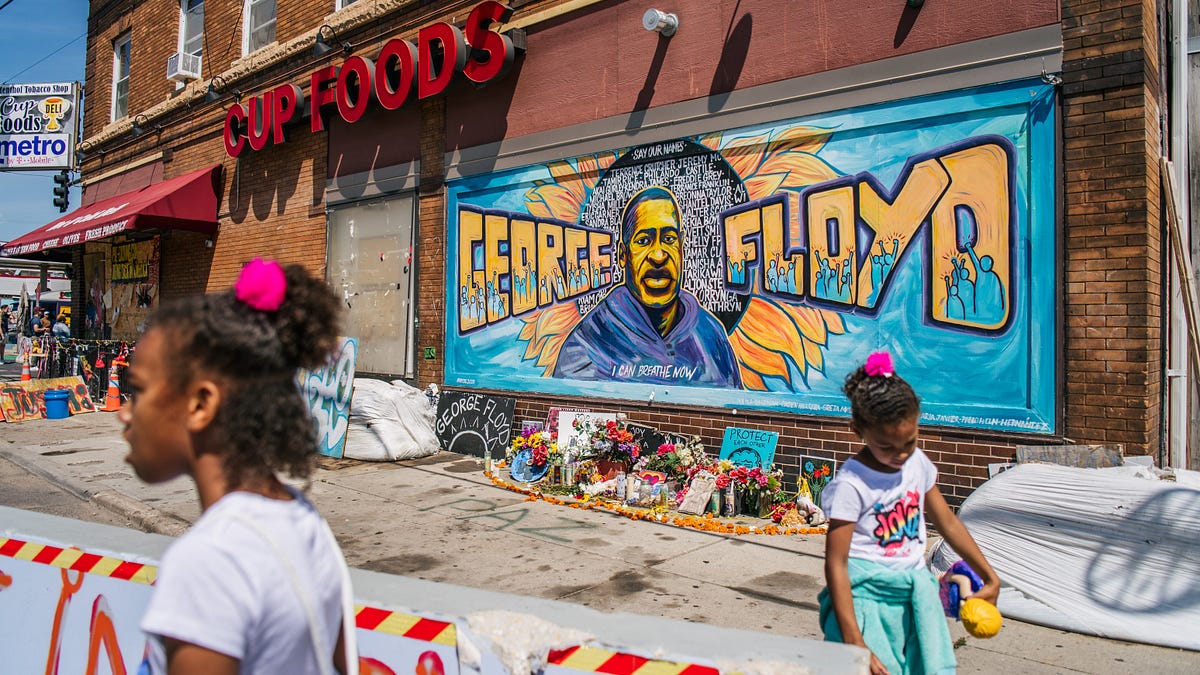
Your book, like Elizabeth Hinton’s “America on Fire,” delves into a decades-long cycle that’s played out in many US cities: Police violence, followed by uprisings, followed by promises for reform and blue ribbon commissions that ultimately produce only “modest change and a photo op.” Did you come out of your reporting with a solid idea of what a better process would look like?
Ellis: I don’t know how you can look at Minneapolis today and say they are better for choosing reform over revolution. The mayor reorganized the public safety department, then there was turnover in the leadership there. The chief who was supposed to lead the transformation of the police force recently resigned in disgrace. Like most police departments in the country, the budget continues to balloon thanks to overtime costs. And at the moment the city is failing to even meet the basics of its court-mandated reforms. By definition this is insanity, right?
I think like anything in local government, having a process for the community to guide designs and offer feedback is important. But I think the starting point has to be a total tear down, not a rebuild. That sounds simplistic, but look at where making changes on the edges has gotten us? Revised training standards and use of force policies have amounted to departments that are effectively the same. The aim needs to be so much higher.
MLs are way ahead on this.
Are they? Their proposals for the state as among the least popular to ever exist. Maybe just below fascism.
Internal unity is not sufficient. You need mass support, which MLs don’t, and probably will never have. This is why (among other reasons) none of their political projects have ever achieved their ultimate goals.
MLs have had larger and more successful revolutions than any other group, but how does popularity determine if a system is a functional one in the first place?
You said they’re way ahead now, so I’m disputing that. Their ideas are very unpopular. Could they become overwhelmingly popular in the future? Maybe but I doubt it, and you saw that historically as the reality of their style of rule became clear there was usually substantial pushback from the masses. A lack of popular buy in has obvious negative consequences for any system. Workers work less hard, they may even sabotage or collaborate with enemies, etc. In the worst case, a lack of widespread support also leads to very costly and damaging civil wars which were a prominent feature of many ML revolutions.
MLs are way ahead in this. What did you think I was replying to?
I’m pretty sure by people they mean “the people” as in the entire or at least a very large portion of people in a given society. Contextually it is obvious that a tiny minority faction is going to lack the popular support needed to launch a successful revolution, and if they attempted to do so in coalition with other factions who don’t share their vision, it will cause conflict. So the point isn’t having the correct theory (which they also don’t have) but rather having widespread consensus and support for that theory. But they can correct me if I misunderstand.