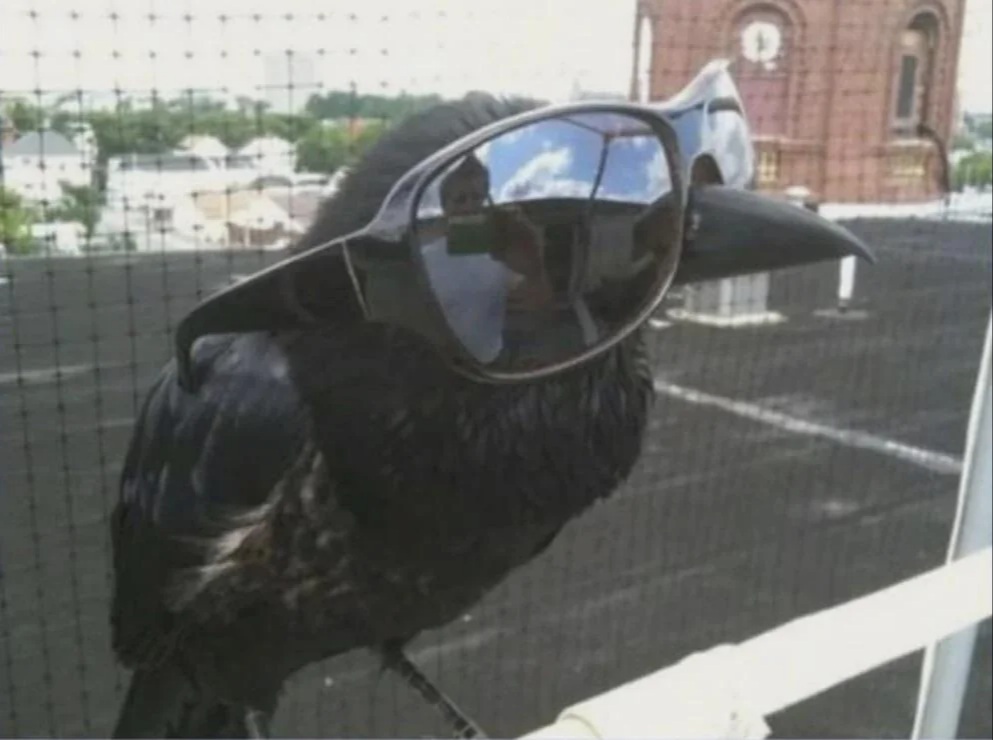

Something I discovered when I started putting actual effort into masking was that the universal social cues, that were well understood by basically everyone else, were in fact neither universal nor well understood by everyone else.
A list of social cues would be helpful. You should write a book.
Dale Carnegie beat me to it
The famous grifter? I just heard a podcast about him! https://www.iheart.com/podcast/867-if-books-could-kill-104279346/episode/how-to-win-friends-and-influence-people-298115714
Maybe? Don’t really know anything besides reading the book. Nonetheless, one of the main attributes of a grifter is the ability to read people, and his advice works, so.
Don’t really do podcasts (or anything but text), but that sounds interesting. Would you be so kind as to summarise?
Happy to, but i would need ti listen to it again first to remember the details. There are some books and other texts listed there as references if you’re interested in following those.
None of the resources seem particularly connected to calling him a grifter, though. The last article is the only one that has anything like a negative title, and the contents themselves are quite neutral.
I listened to it again last night, and I mostly agree. He did a few shady things, like lying to newspapers, making up fake stories about fake people that his seminars helped, and then using the newspaper articles to drum up more business. And a lot of techniques (like selling self help books or seminars) were later exploited by grifters.
But it seems like his book and seminars genuinely did help people, with mostly good advice.
There was also the criticism that his advice, if followed to the T, would have you avoid all conflict in order to get along with people, when the real world isn’t like this. Also, some of his advice for women is dated by the time period in which it appeared.
But on the whole, a lot of his book is good advice, like listen to people, try to be genuinely interested in what they say, try to find things you genuinely appreciate about them and avoid empty compliments, and even had the neurotypical compliment that the advice was “obvious” but a good reminder neverless.
One last funny fact about him was that his name was originally spelled differently, but he had it legally changed to match the spelling of Andrew Carnegie’s name, so he could lean into people assuming that they were related.
You think you see all those things. Not all of what you think you see is true.
This is called hypervigilance as a trauma response
You have cptsd too?
“I’m an empath”
> Looks inside
> Childhood trauma
Ain’t nothing powers empathy than a keen sense of right and wrong
Or a moral injury

How I survived this unwelcome gift of insight:

I learned that I’m the “don’t notice cues” type, but I learned to (kinda) read a room. After reading rooms for a while, I realized it was bullshit and started brazenly defying the stupid ones. It’s very fun to openly challenge management, btw
Record yourself in a social situation and then play it back a week later. Cringe. Repeat.
Yes, and I almost always say or do the most awkward shit in response to my overanalysis of the interaction. Then I beat myself up about it for anywhere between 24 hours and 20 years
I’ve been trying to articulate this for years now but couldn’t string together those words so efficiently
I thought I was, now I just listen to my heart and do what comes to me, forget all the social business, I’m a good person and tired of second guessing myself
Same. Getting older helped a lot. Giving way fewer fucks now!
I am in this picture and i dont like it
I notice all the social cues on multiple levels and I’ve decided that knowing that stuff is only useful on a subconscious level that I’m not even aware of. So I just trust my gut.
I just keep overthinking what to say or ask to be polite so I end up being quiet and looking like I was having bad time.
From what I’ve read, having a deficit in social communication is a core definitional symptom.
https://pmc.ncbi.nlm.nih.gov/articles/PMC6105175/
“Autism spectrum disorder is defined by two core symptoms: a deficit in social communication and…”
https://www.autismspeaks.org/autism-diagnostic-criteria-dsm-5
“[The DSM-V states] that an autism diagnosis requires persistent deficits in social communication and social interaction across multiple contexts, as manifested by the following: deficits in social-emotional reciprocity, in nonverbal communicative behaviors used for social interaction, and in developing, maintaining and understanding relationships.”
https://www.autismalert.org/uploads/PDF/INFO--DSM 5 Diagnostic Criteria.pdf
Exact text of the DSM-V on autism:
Diagnostic Criteria
A. Persistent difficulties in the social use of verbal and nonverbal communication as manifested by all of the following:
- Deficits in using communication for social purposes, such as greeting and sharing information, in a manner that is appropriate for the social context.
- Impairment of the ability to change communication to match context or the needs of the listener, such as speaking differently in a classroom than on the playground, talking differently to a child than to an adult, and avoiding use of overly formal language.
- Difficulties following rules for conversation and storytelling, such as taking turns in conversation, rephrasing when misunderstood, and knowing how to use verbal and nonverbal signals to regulate interaction.
- Difficulties understanding what is not explicitly stated (e.g., making inferences) and nonliteral or ambiguous meanings of language (e.g., idioms, humor, metaphors, multiple meanings that depend on the context for interpretation).
So, I’m not a diagnostician, but if you have above average ability to read social cues, then that sure sounds like it excludes a diagnosis of autism.
If anyone has information from an authoritative source that explicitly says otherwise then I’d be interested to see it, thanks
To me, this meme explains the internal workings of some autistic people. What you see on the surface is a person unable to respond in a socially appropriate way. Underneath it could be a deficit in reading social cues or an overload of social cues (which is explained here). The latter is more common in AuDHD - the combo of autism and ADHD. The DSM-5 is way behind the times and does not recognize AuDHD as its own thing. Hell, before 2013, having austism would rule out ADHD and vice versa.
The DSM-5 is way behind the times
Understatement of the year.
So, I’m not a diagnostician, but if you have above average ability to read social cues, then that sure sounds like it excludes a diagnosis of autism.
I’m glad you disqualified your opinion before you shared it because ability for reading cues is a very narrow aspect of what could contribute to difficult social interactions.
Some of us develop a heightened kind of vigilance for social cues because of how we’ve been punished for our natural lack of understanding them, and that doesn’t necessarily confer ANY ability to effectively act on those cues appropriately in the way we ought to.
Seconded.
Similar, I think because I have ADHD and Autism or something of that nature. I can never tell where the line between the two is TBH.
I’m AuDHD too. It can be difficult to say the least.
This is from my assessment training manual:
"The AuDHD profile is defined by competing neurological needs that can create significant internal conflict. Key contradictions include:
- The need for routine and predictability (autism) in conflict with the need for novelty and stimulation (ADHD).
- Social exhaustion and sensory overwhelm (autism) in conflict with loneliness and desire for connection.
- Perfectionism and high standards (autism) in conflict with procrastination, task initiation failure, and inconsistency (ADHD).
- Deep, sustained special interest focus (autism) interrupted by ADHD-driven distractibility and difficulty sustaining attention on non-preferred aspects of those same interests."
Sounds like they were writing a story about me in there.
Good luck on your journey!
Damn, here I was thinking I was neurotypical and it turns out I may be the bastard child of autism and ADHD. What a plot twist.
I feel like this isn’t a real thing. What you described is how I feel and how I would describe the vast majority of the people I know. The people that I wouldn’t say fit these behaviors I would consider clearly have some other mental disorder.
Maybe I’m in a bubble of people like me? Idk it just seems like the default behavior…
We’re self-selecting to gather together for some reason.
Congratulations with your diagnosis
Yup. Tiny projects that finish fast for autism, long-term projects with digressions for the ADHD. Permission to go weird occasionally and do a deep dive on something novel for both.