

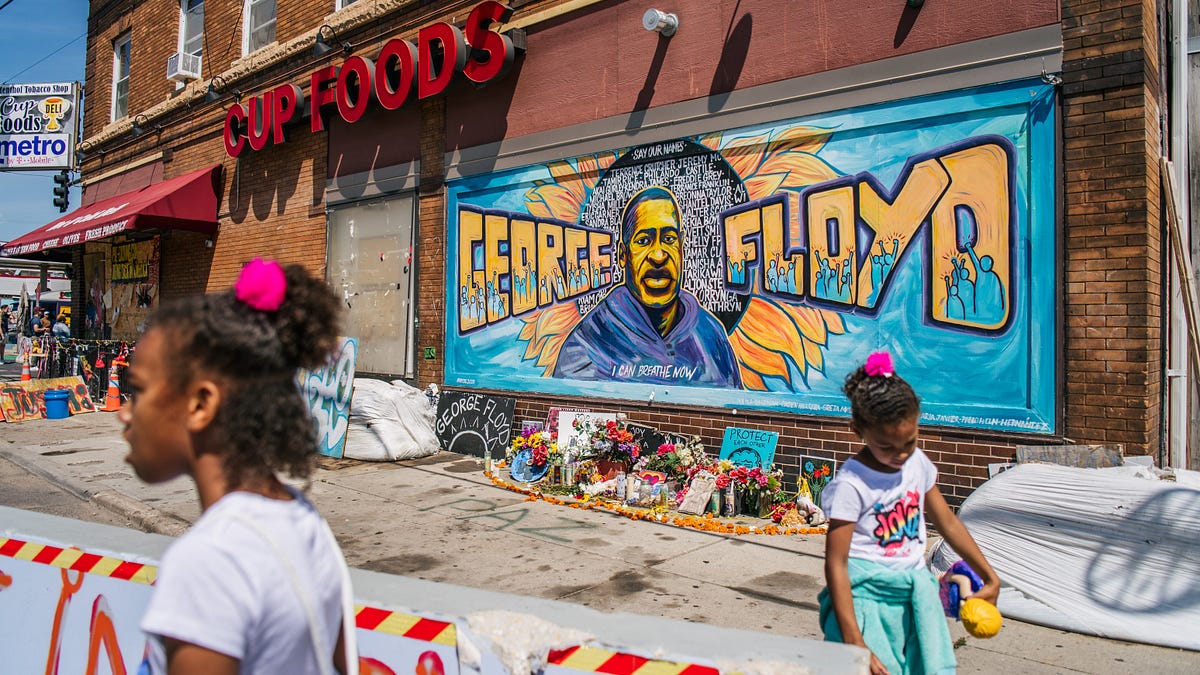
Your book, like Elizabeth Hinton’s “America on Fire,” delves into a decades-long cycle that’s played out in many US cities: Police violence, followed by uprisings, followed by promises for reform and blue ribbon commissions that ultimately produce only “modest change and a photo op.” Did you come out of your reporting with a solid idea of what a better process would look like?
Ellis: I don’t know how you can look at Minneapolis today and say they are better for choosing reform over revolution. The mayor reorganized the public safety department, then there was turnover in the leadership there. The chief who was supposed to lead the transformation of the police force recently resigned in disgrace. Like most police departments in the country, the budget continues to balloon thanks to overtime costs. And at the moment the city is failing to even meet the basics of its court-mandated reforms. By definition this is insanity, right?
I think like anything in local government, having a process for the community to guide designs and offer feedback is important. But I think the starting point has to be a total tear down, not a rebuild. That sounds simplistic, but look at where making changes on the edges has gotten us? Revised training standards and use of force policies have amounted to departments that are effectively the same. The aim needs to be so much higher.
Your teacher was not an infallible source of knowledge, and clearly was not as well versed as they should’ve been when teaching this subject.
As you mentioned, Nazi Germany was defeated much quicker due to its centralized, all powerful leadership making incredibly bad military decisions repeatedly over the course of WWII. No one could say no to Hitler or his staff, even if people lower in chain actually fighting near the front lines had a clearer view of the situation.
They did have military centralization, in the form of the voluntary bottom-up command structure that you previously declared wasn’t Anarchist.
Individual platoons and squads having autonomy results in the exact opposite of what you describe, as they can make decisions on the fly based on what is actually happening in real-time in front of them (while still coordinating with the larger bottom-up militia).
This is proven out even today in the Ukraine war, where Russia continues to suffer incredible losses due to their extremely strict top-down command structure, where lower level units can’t do virtually anything without approval or orders from much farther up in the chain, which takes forever and doesn’t allow them to respond adequately to emerging threats. Ukraine on the other hand has been willing to update their command structure from the outdated Soviet style, instead adopting the modern squad level independent decision making that the US adopted decades ago, which has made them far more effective in their ability to defend against the invasion.
They didn’t want to join the Republican army for good reasons. Being under their command with no option to refuse bad orders or to recall bad commanders, especially in an Army that was quickly taken over by tankie Stalinist leaders who would likely try to use the Anarchists as shock troops to cull their numbers and leave the Stalinists more poised to betray them (which they ended up doing anyway, even as the Fascists were winning).
They repeatedly asked the Republican for supplies and help, but only ever received meager supplies and worn out old weapons, the scraps, essentially. The Anarchists put in a call for the Republican government to purchase more weapons for them, and suspected they never would and even seriously considered robbing the Republican bank to finally buy their own supplies, but decided to simply wait for the Republican government to do something so as not to disrupt their alliance, which ended up being the wrong decision, as the government later just gave virtually all of their gold reserves to the USSR in exchange for low quality weapons at extortionist prices, and once again the Anarchists got fuck all from it.
Yes, that’s true, but the Anarchists lack of logistics and supplies had nothing to do with Anarchism itself, but purely due to literally no outside force being willing to help supply them. The Allies and USSR in WWII would’ve been fucked if the US hadn’t have been constantly supplying them with its massive, unbombable factories churning out supplies to keep the Allies supplied, regardless of their political system.
This literally also applies to you. Did you read what I sent? It literally outlines the consistent lack of centralized power by anarchists. You can’t just decide they had central power when that’s literally the exact opposite of anarchism, you have said that yourself in this thread.
You have said this was explicitly not why Nazi Germany lost. I had to tell you it was. Again, you are not an infallible source and have just proved it again.
Literally a contradiction. You keep saying the same things and I think in your mind you have built up what it means and have decided this is true about anarchy and it is correct and it cannot be wrong, you’re not being honest and challenging your view. This is not a centralized command structure this is genuinely 100% entirely the opposite of such and I have directly outlined and provided a source that says exactly that.
Because democracy like I said. The west especially after the Americans joined the fighting was fluid and relied on forces that worked together but their command structure wasn’t as centralized
Example - Roosevelt was the president and definitely had overall decision making process however unlike Germany he relied on Eisenhower to run the European theater and MacArthur in the Pacific theater. And below them they each had their own subordinates who had the power to make decisions without the need for higher up approval which continues down the line to a point where smaller platoons and companies could orchestrate themselves but did not hold a level of authority to be totally autonomous and so it was a fluid top down structure. Unlike Germany who specifically relied on high command to tell them what to do. And also unlike anarchists who, as you said, was bottom up. Ukraine is most similar to America’s structure where Zelensky has the most decision making power but the men below him have a ton too and that structure continues until you get to smaller platoons who don’t really have that level of decision making because it becomes less effective if they are not coordinated properly which is exactly what the anarchists struggled with.
I agree. But they also were not as united as you’re saying. You are treating it essentially as a hive mind and not appreciating how individualistic people and factions are.
Yes and they also completely failed to work together at times as detailed in what I linked. There are times when members outright refused direction from national leadership. The logistical consequences from lack of a ACTUAL centralized power(not what you keep asserting which is not centralized power) resulted in shortages because they could not agree where weapons went, which fronts and groups received priority and overall who controlled the general military production.
Overall none of this is hard to understand you can literally see this unfold in a group project. If you do not communicate who does what, two people are gonna show up with written essays, two will be prepared to present and nobody made the actual presentation. That’s essentially what happened here.
Again you are not infallible either, and I do take a degree of offense on you saying my teacher wasn’t also. Of course he wasn’t. But he wasn’t wrong. Read what I linked, it outlines everything. Read Orwell’s writings he talks about it. Historians from today will literally tell you the same. Just because you don’t agree or decide not to see it doesn’t make it true.