

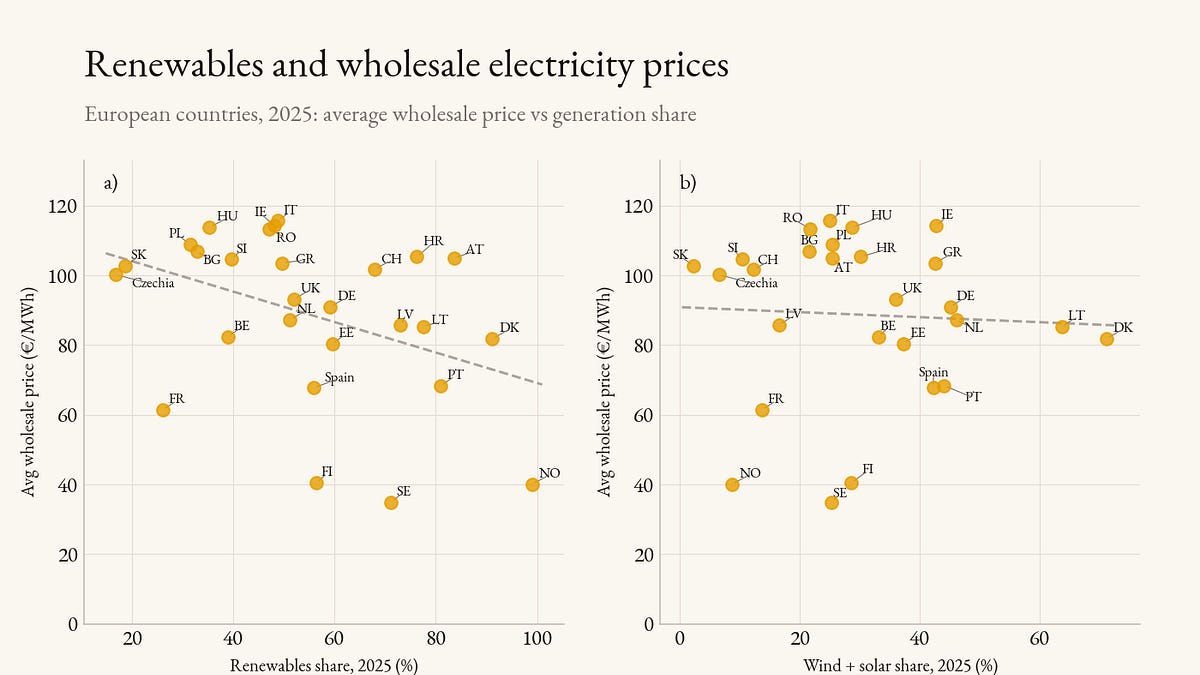
What this means is that wholesale price doesn’t drop until gas -burning power plants are not being used. So it takes quite high renewables+ battery deployment to lowe wholesale price.
What this means is that wholesale price doesn’t drop until gas -burning power plants are not being used. So it takes quite high renewables+ battery deployment to lowe wholesale price.
Wholesale electricity markets tend to be set up like this:
This causes the marginal supplier price to set prices for everybody. So long as any gas is being burned, they’re usually the marginal supplier, so the price of gas sets the price.
Yes, I know. Like I said, “can’t” do the math expected of their employees for their work. Theare able to measure the kilowats going into millions of homes, but can’t measure the kilowatts they consume. So they get potentially 90% of the electricity dirt cheep, but charge everybody as if they paid the highest price on the market for all of it.
It’s not that they “cant figure it out”, its that its a reverse auction where everyone gets paid the lowest price that is needed to provide the last bit of capacity. Why should a solar plant get paid 20% of what the gas plant gets paid just because they are more efficient?
That marginally cheap sources like solar or nuclear get paid a large profit for each kwh is a good thing, it encourages more of them to be build and over time push out the expensive marginal cost of gas (and coal where it’s still used).