

42·
3 months agoGermany actually does that! Quite a few government bodies are already active at https://social.bund.de/. Maybe there‘s hope that other countries will follow.
Germany actually does that! Quite a few government bodies are already active at https://social.bund.de/. Maybe there‘s hope that other countries will follow.

I‘d probably go with a VPS. It probably won‘t cost more than 10$/month, maybe even less, depending on how much heavy usage your Nextcloud instance requires. And you won‘t have to worry about keeping your hardware and network running, which pretty much always takes up more time than expected.
Some web hosters (I‘ve had very good experiences with Hetzner) charge an hourly rate and allow you to preconfigure VPSes with software like Nextcloud. So unless you have specific needs, you could just spin up an instance, check if it suits your needs and, if not, only pay a few cents.
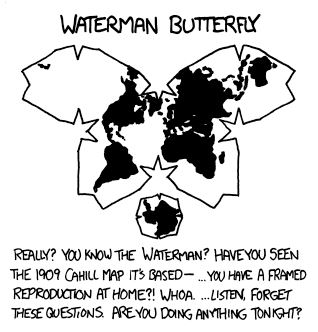
There‘s a great episode of Map Men covering this map and a few other, similar ones.

I think it’s important to remember that LiMux, the Linux project in Munich, didn’t really fail because the software didn’t work. The city had commissioned a study that blamed bad implementation, bad internal cooperation, and bad administration. It explicitly did not recommend that the project be shut down. Unfortunately, this recommendation was ignored by the mayor, who was previously responsible for convincing Microsoft to move its German headquarters to Munich and who calls himself a “Microsoft fan”.
So it’s probably worth noting that the success of such large projects doesn’t only depend on the viability of the software. It’s also very much dependent on the lobbyists the project is up against, especially in the public sector.

I‘d be really surprised if Apple tried that.
They have to know that it violates the DMA. And the penalty for violating it can be up to 10% of their yearly worldwide revenue (not earnings!) for the first violation and up to 20% for repeated violations. I don‘t think they‘d risk that, especially as the EU really isn’t known for its leniency when someone intentionally breaks their rules.
The Steam Deck uses the capacitive thumb stick sensors to completely disable the trackpads as soon as the stick above the respective pad is touched. This works very well, so I think they‘ll implement the same thing here.