
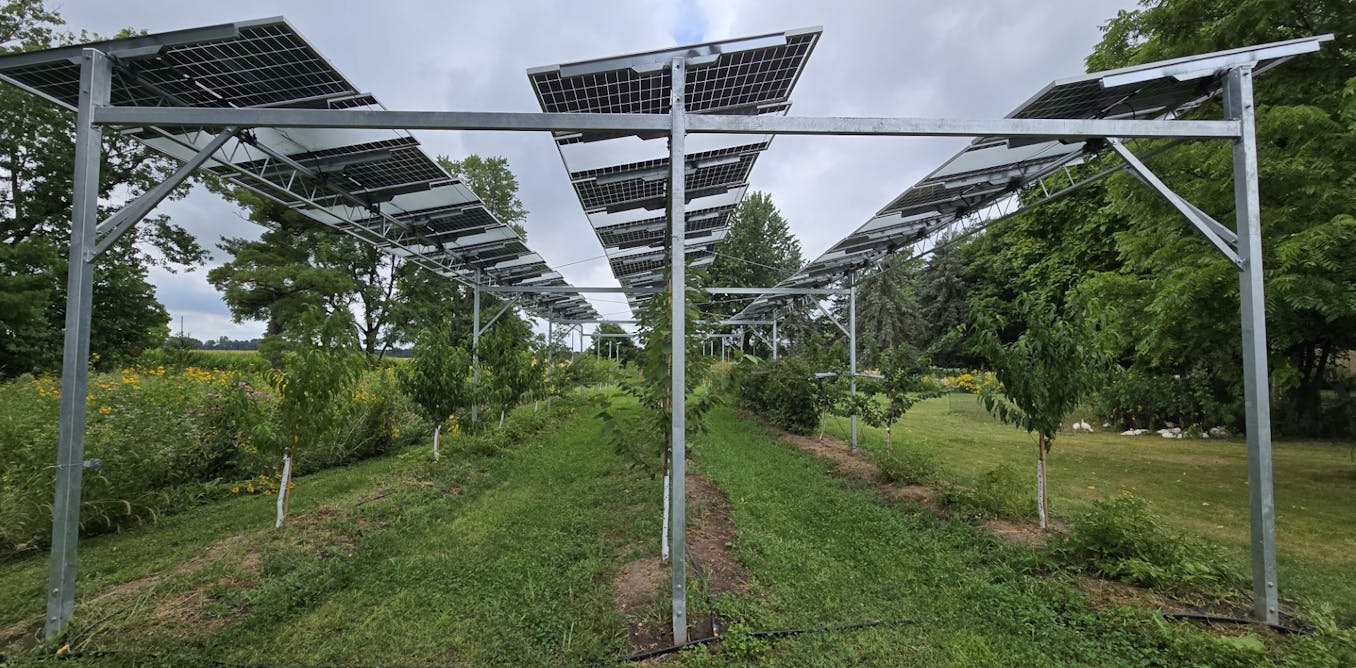
Studies from all over the world have shown crop yields increase when food crops are partially shaded with solar panels. Agrivoltaic yield increases are possible because of the microclimate created underneath the solar panels that conserves water and protects plants from excess sun, wind, hail and soil erosion. The temperatures are cooler, milder and all around more pleasant for plants.
Last year, we found that you could increase strawberry yield by 18 per cent under solar panels compared to strawberries in an open field. This agrivoltaic crop yield bump has been shown for dozens of other crops and solar panel combinations all over the world, including basil, broccoli, celery, corn, grapes, kale, lettuce, pasture grass, peppers, potatoes, tomatoes and more.
Our new study shows that the microclimate that benefits plants beneath agrivoltaics is maintained even when the solar is not generating any electricity.
We analyzed the lifespans of key agrivoltaic system components, experimentally measuring microclimate impacts of two agrivoltaic arrays. The results showed agrivoltaics still benefit crops even when unpowered.
This adds up with my own experience. The last 2/3 summers (climate change?) unusual heat and lack of rain has had a negative effect on my land. I’ve been looking at planting more trees in order to create more shade, so the plants don’t get so zapped but this would work too if you’d benefit more from extra electricity.