• 9 Posts
  • 202 Comments
Joined 3 years ago
cake
Cake day: June 11th, 2023

help-circle


  • On Wednesday the Interior Department announced that it would pay the energy developer Invenergy $765 million not to develop three offshore wind farms. This is the third such payment by the Trump administration to undo offshore wind projects that have been years in the planning. Trump has so far committed $2.5 billion in taxpayer dollars to killing renewable energy projects.

    Sounds wasteful. A state actually paying people so they won’t deliver electricity to other people.

    As for why - I mostly agree, it’s about campaign finance. He’s been paid off by fossil fuel lobbyists. The price of helping him into the White House was a duty to fight windmills, so that’s what he does.

    Meanwhile every sensible person, company and society looks for alternatives. Dependence on petrostates is bad in so many ways.


  • Not well, but it drives.

    Battery capacity is small. It’s a city car all the way.

    Heating is abysmal. I don’t touch it, it drains the battery. I only heat the seats (from the car 12 V system) and windscreen (with a large drone battery and two Chinese 400 W heat blowers).

    Different sizes of tyres of front and back wheels are impractical. Changing headlight bulbs is a nightmare (manual says to take off the front bumper, but I deviate from the procedure and leave some screws missing, so I can take out the headlights).

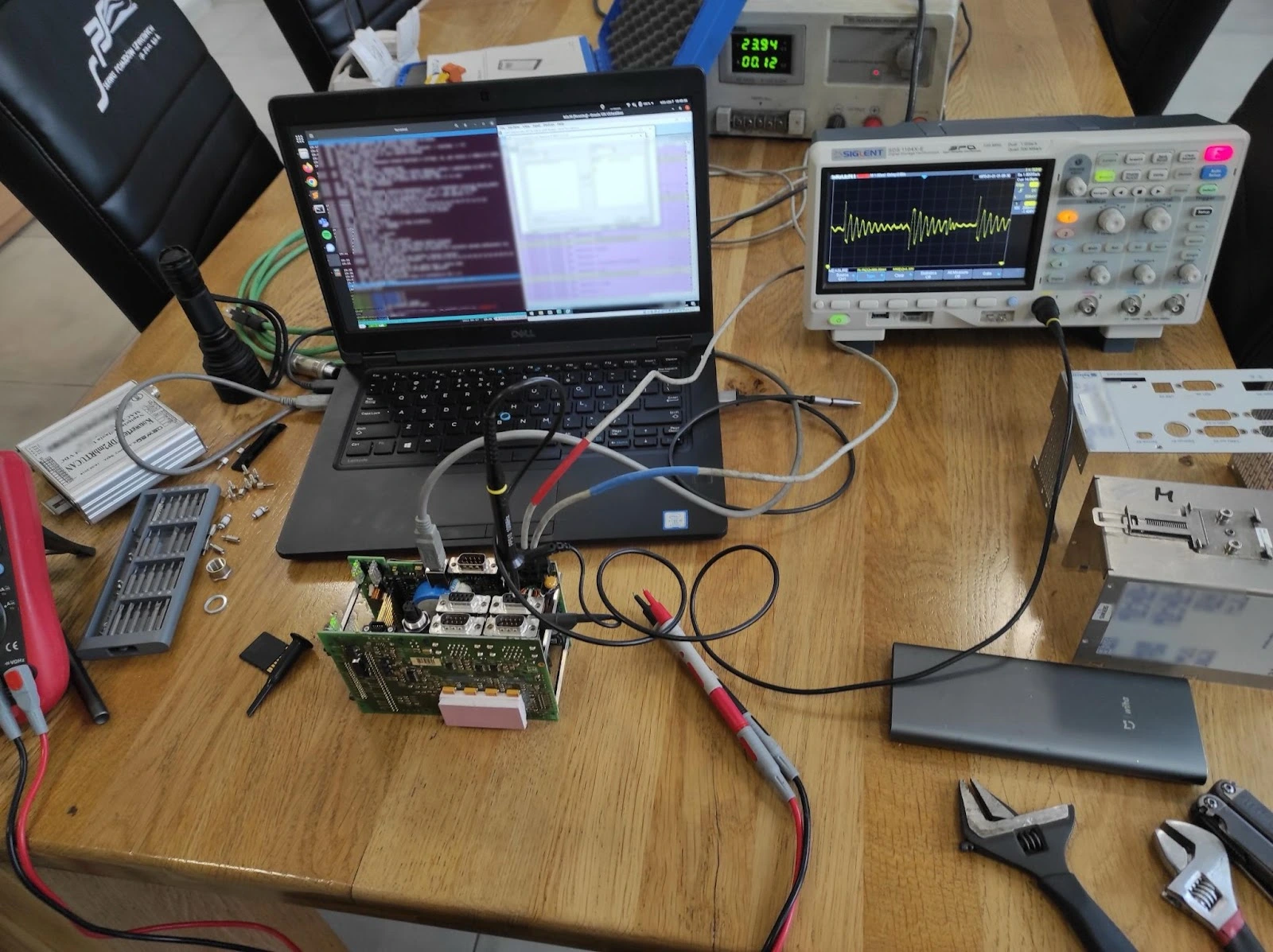
    The gear shifter has 2 needless pull cables (not electrical cables) which freeze in winter and cannot be bypassed easily. The motor controller borked itself (high voltage comparator error) and I had to take it apart to fix (fortunately a fix was documented).

    One of the steel brake pipes rusted and leaked, and the repair shop refused to lower the battery (I have done it myself) because they didn’t feel comfortable. I had to bypass the steel pipe with a copper pipe, fortunately technical inspection did not notice.

    Rear ABS sensors go faulty and start lying, producing error messages. An “original” spare part costs 200 euros, fortunately there’s a trick (installing another car’s sensor in reverse) and it costs 17 euros.

    But what I can I ask, it’s a 15 year old car.


  • I’m in Europe, so we have 230 volts here (two times less amps needed for identical power), but… I charge my i-MIEV with 5.5 amps at night (the whole night) and it’s charged by the morning. Knowing that, I optimized my grid connection down to 3 x 6 amps (three phases, each up to 6 amps).

    Of course, if I charge during daytime, I can draw power from the house inverter, so then I charge at 10…13 amps.


  • To manage without an inverter and charge your bike almost directly from solar (soldering and electronics skills needed) I would consider an adjustable DC/DC converter.

    1. Small step-down converter with current limit:
    Input voltage range: 6-40.00V
    Output voltage range: 0V-32.00V
    Output current: 0-5.1A
    Output power range: 0-160W


    https://www.aliexpress.com/item/1005006294300036.html

    1. Big step-down converter with current limit:
    Input voltage: DC12-80V (can not be used for 72V battery)
    Output voltage: 2.5V-50V adjustable (only buck) (maximum output voltage = input voltage * 0.8)
    Output current: 20A (MAX) 25A overcurrent
    Maximum power: 600W
    Conversion efficiency: ≥ 93%
    

    https://www.aliexpress.com/item/1005007391865816.html

    1. With serious and silent cooling, dual displays (voltage and current), adaptive current limiting that considers temperature, input up to 120 V DC (be careful, this voltage level is deadly):
    Input: DC 25-120V
    Output: DC 1.2-75V adjustable
    Current: 20A (MAX)
    Power: 600W (Reduce current based on heat dissipation when voltage difference is high)
    

    https://www.aliexpress.com/item/1005010659062631.html

    The downside of a simple converter is that it doesn’t know about the optimal loading point of your solar panel (doesn’t do MPPT or maximum power point tracking). If you want that (it gives 30% more productivity), consider an entry level solar charge controller, but it must support 48V battery mode (I notice that your charger outputs 63V, the termination voltage of a 48V battery is usually 64V) and manual fine adjustment of the termination voltage (to bring it lower).

    This might work since it appears to have a “user” (user defined) battery type:

    https://www.aliexpress.com/item/1005010080097662.html

    Manual here to find out if it actually would:

    https://www.nikom.biz/pic_info/A656017/Homysun-MPPT-Solar-Charge-Controller-datasheet-60A.pdf

    Note: dial in less than your full battery voltage and don’t push the Chinese products to their maximum advertised current. Your upmost output voltage + voltage ripple + measurement error must stay below the full battery voltage. Of course, you must have a balancer and BMS (to stop everything in an emergency) on your battery. I also recommend a timer.

    If you need to step the panel voltage upwards, consider a “boost converter” or “step up converter” instead, or wire two panels in series and use a step down converter.


  • Colleagues, users of Lemmy, please do not downvote this poster. Most solar power installations in use today are grid-following, so it’s correct to point out: if the grid drops, most solar inverters stop. Your average Huawei is not capable of operating in island mode. It needs a reference frequency to follow.

    On most days, this is not a problem. The operator of the electrical grid will do everything to keep it up.

    However, it’s a real risk if your electrical grid should get bombed, or pelted with ice rain.

    Myself I have a different kind of a solar power system, and it’s not commonplace. It’s easy and doable, there is plenty of instruction available, but it’s less profitable.

    panels -> DC -> charging controllers -> DC -> interrupter -> battery bank -> balancers and fuses -> still DC --> local consumers, among them an inverter --> finally some AC --> possibly the grid

    To get a safe system, ask a specialist or learn about balancers, interrupters and fuses. Everything is DIY-able with a willingness to learn. Avoid dangerously high voltage if you aren’t certified to work with electrical power.


  • If you don’t mind divulging, how does that stack against timber for cost at least for the time?

    It’s too expensive but practically indestructible, except in salt water. Unlike wood, it does not offer any favourable thermal properties, so you can only do unheated sheds with it. I came across a pile of it on a bankruptsy auction, which made it possible to afford its use.


  • I recommend to find some assistance. Even one other person can help immensely at certain points.

    I have built a 2-storey shed on a metal frame alone, and it involved highly inconvenient and more than moderately dangerous stages. I would not do it again.

    I managed only because I relied heavily on industrial aluminum profiles for machine building (engineer’s Lego beams).


  • If you don’t mind buying from Guangdong and being hit with import and customs fees, then on Linux, this gadget presents a standard V4L (Video4Linux) USB camera.

    https://www.aliexpress.com/item/1005007938478574.html

    The cable is delicate, you’d have to find a way to secure it against damage (e.g. tape). For the 256 x 192 pixel sensor, focal length 4 mm will get you an ordinary field of view (e.g. 45 degrees), while 9 mm will get you a very narrow field of view (e.g. 20 degrees). Grayscale image, very fast frame rates, automatic calibration against a shutter (occasional sub-second stops in video).

    Note: never ever point at the Sun. It has poor solar protection, I almost ruined it when my code erred and scanned across the Sun, leaving a massive black track which took several hours to fade. The shutter closes when it sees the Sun, but not fast enough.